Archive for the 'socialmedia' Category

BarCampBrighton and SL connections

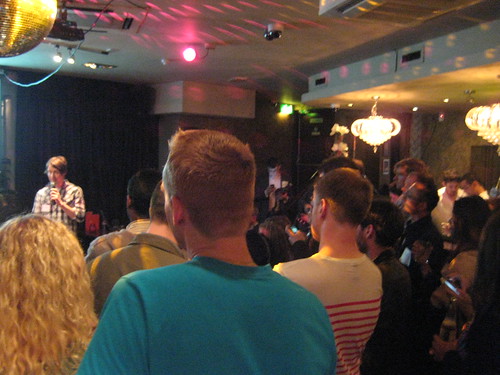
Aleks Krotoski talking about the social graph.

  • [missed the start] A social psychologist, trying to examine connections
  • Pathways can be mapped across friends and people.
  • Mass friending…impact the data and how the network connects.
  • there are certain relationships and strengths of relationships. You can technological measure strength but difficult as you get to semantics.
  • Adding arrows to the graph starts adding information. You can add lots of information, but then it all gets mushy in the middle.  Fuzzy and gooey and technologiest don’t like that. Then I come into the mix and go oooh psychology.
  • So how do you measure strength…

    • I asked the social psy questions. list friends and rating of them..
  • Based study on actual connection on a virtual world, on the qualitative assessment of relationships

    • Second half of study was looking at getting behavioural shortcuts for this
    • some evidence about how interactions acorss various channels indicates trust.  ie talking in public, IM in SL, outside of SL via email.
  • Once you have all the information, all the messy stuff. I was looking at interconnected, closely related groups of people.  I’m interested in them…as they know each other. In the mess, many people, but don’t know others, they identify as something.  Look at a self-decared group to see if they are differently connected.  I did an island analysis, pulled out 4 groups of people who are extremely closely connected to each other.  There’s a lot of trust between each other.
  • The point: There are social relationships which have psychologies that can;t ey be articualted through technolgy.  There are social flocking/network effects in these spaces - people move to where their friends are.   Whatever is happening…they’re capturing a lot of data about us.
  • The data they are capturing is going to be a key discussion coming up

Tags: , , ,

Charlene Li and Revolutionaries at SXSW

Charlene Li about the changing  of corporations and social media.

  • Examples of the change: the HD DVD key and Digg. Jericho and the peanuts.
  • Shaun Daly was a fan of Jericho drove the change - you had to have something physical that CBS could not ignore. They bought it back, and it’s doing OK. CBS had nothing to lose.
  • New book - the Groundswell. A social trend in which people use tech to get things from each other, rather than traditional institutions like corporations.
  • This has been going on for a while, we have been talking about the revolution for ages and finally corporations are getting it. It’s too easy for people to feel they need to get involved..but they do not know how.
  • we are at a new stage, so are you going to be a radical like Thomas Paine, a founding spark for the US revolution.  Or a revolutionary like Thomas Jefferson. Instead of railing against the problem, he went to solve it, pushing the problem to solve it. The first had hte vision but could not deliver, the second had the process and framework to pull it together.
  • To make revolution stick you need to have frameworks and process.  There are many corporations that want to be part of the revolution but don’t know how. It’s up to us, he have been living it.
  • So going to look at the processes, who are the revolutionaries and some case studies
  • Use POST
  • PEOPLE - who is it, and what are the activities
  • OBJECTIVES - what are you trying to accomplish
  • STRATEGY - plan for how relationships will go
  • TECHNOLOGY - what are you using. this is last.
  • People - we think about a ladder of participation. Inactives. Spectators. Joiners. Collectors. Critics. Creators.

    • Joiners - in the networks, with their friends etc
    • Collectors - collect the good stuff, collate
    • Critics - comment and assess
    • Creators - create the content
  • People - It’s a different mindset between the types. 48% are spectators, 18% are creators. These are categories, not a split. People can do different things in different place. With youth, 39% are creators, 43% are critics. 58% are joiners.
  • People - Age is a major driver of adoption.  (see the data on Slideshare). As people get older, they get less active - it takes them longer to adopt and the content is not necessarily geared for them. But that is changing.  39% of 51-61 adults are spectators though, and they will move to critics or creators. Not everyone participates in all areas and it changes. but you need to know the roles your audience have.
  • Objs - what do you want?  Research can be a lot of listening in the Groundswell. Marketing will change from shouting to talking.  Sales can change to energising, to getting people involved. Support needs to carry on supporting, to listen. Development may change from closed to open. Embrace the customers in the process.
  • Objs: the Talking Objective.  example is Blendtec. Videos on YT, viewers responded. Blendtec have increased sales by 25% to consumer market.  it was George Wright, VP of Marketing, spent $50 on first video.  He had started thinking about how to show people.  Dan Black, Director of Campus recruiting for Ernst and Young. Uses Facebook to recruit college students. Created the page, students were asking questions on the wall. He went to answer them back, in public. He is the head of Recruitment, not staff, not agency. He realised that this is one of the few channels he could have a direct conversation.  There are few people doing this - having a real conversation.  Next. Best Buy Gary Koelling and Steve Bendt. They started blueshortnation.com to connect with people on the front line.  They found it was not great for creating insights for their marketing, but great for understanding the people,, for helping staff.  It has enabled customers and employees to support themselves. Josh Bancroft, at Intel, a geek blogger. They were looking at doing their own wikipedia - corporate were delaying, think it would take a long time. He just went and did it. Got the server and started the process.   Steve Fisher, VP of platform at salesforce.com. They wanted to get customers of salesforce to contribute in how to improve the system. In the system, they had banners that announced marketing stuff. They got 6000 people to say they hate it, which gave them the drive to remove the thing that was not liked.
  • So how to start the change?  Follow the process
  • Case Study - Lionel Menchaca. At Dell. Started off as a product technician, became part of product review PR team. connected with everyone at Dell. Then Dell Hell happened, he started the blog resolution team - to solve the problems, to connect the people. Dell then started the blog and lionel led the team.  Initially it did not go well, lots of issues. But Michael Dell supported him, and Lionel decided to change the way they were doing the blog.   He talked about the flaming laptops, in a real way, sorting it out. this is when it started transforming itself.  Slowly, change happened in the company, looking at what people were saying.  Lionel did not keep it isolated, spread the mindset through the organisation. IdeaStorm was another change - getting feedback into products and innovation. They also have a blog for their investor relationship teams.
  • So how do you find and support the revolutionaries?

    • Find the people who are the most passionate about developing the relationships
    • Educate the executives. What it is, what are the benefits
    • Put someone in charge. It has to have priority, has to someone to be accountable.
    • Define the box with process and policies.
    • make it safe to fail.
  • So you need a framework and policies; start small but think big; make social strategy the responsibility of all; be patient - cultural change takes time.

Audience Questions

  • Q: what are your recommendations about success and assessing impact?  A: we get asked this. you can use a blog to do any of the objectives. make the measures based on the objectives.   Is it supporting, is it energising, is it talking. what are you doing?
  • Q: any pointers for regulated industries?  A: some of the most active clients we work with are pharma and financial. the people who are writing it are the ones who know exactly what they can say
  • Q: how about smaller companies A: B2B is also there. it is more focused, that is an advantage.
  • Q: what about virtual worlds? should companies explore them?  A: it should be avoided, but large marketing spends. it’s a unique environment. there are some great uses inside corporates. 
  • Q: you said that change comes slowly. You showed stealth adoption and education as two methods. Any others?  A: I have a whole bunch of tips (in the books). Executive input, get all involved. you have to communicate and get people to live it every day.  It can be easier internally, marketing has a lot of culture to get through, they want to keep the message pristine, customers do messy stuff which causes issues with marketing.  you need to feel uncomfortable, if not then it won’t move forward.
  • Q: Internal to companies, how do you convince internal leaders. What are you seeing other people do?  A: they can all happen internally.  You have to focus on the benefits. What are you afraid of with information flowing. start small.
  • Q: How do you get people to contribute. A: the companies give feedback about what has been implemented. it shows that they are listening. You have to close the loop.
  • Q: you have mentioned benefits for SEO? Can you expand?  A: search engines weight inbound links. Simple tools are out there. Do it on the main domain
  • Q: all these platforms and tools, what are other things. Q: Buzzlogic, visible technologies to monitor. Forums and bulletins are best - really good and robust tool. It’s not about the technologies but it is how you use them.

Tags: , ,

What teens want online and their phones

Anastasia Goodstein brings together a group of teenagers to talk about how they use mobile and the web.

  • they are early adopters but the tech needs to meet core needs. This is atalk with a panel of teens from ages 12-17
  • What do you like? 

    • Goodreads.com, cos a social network site, plus reviews of books, purevolume.com, signed and unsigned bands, get a taste of a lot of stuff
    • myspace and facebook, cos create own layout and put pictures, customise the design, to communicate with friends and family (sisters)
    • myspace and facebook, more facebook cos it has addons - can make own superhero.  to be connected with everyone at school. Also Digg, Newsforgamers
    • myspace, hi5, to keep in touch with friends and family - especially on holiday times.  Looks for bands/music. Meet new people from school that I don’t know.   (is 12, and is 16 on myspace)
    • myspace, mixmatters - a music website, has artists, plus a mixtape website (datbizz)
    • 17.com, to keep updated with styles, not too good, does not tell you how to do the hairstyles. hipster.com, for playlists and new music.
    • myspace, to talk to friends and family. runescape. chat to people all over the world. (12, but 99 on myspace)
  • What annoys you?

    • ads everywhere, distracting ones. They slow down the computers. On nba.com, ads for Miller between each vid that got annoying - the same things everytime.  Viral attack on myspace. Insterstitial ads are really annoying. Sound files on ads. Taking 6000 years to load - so much crap to load, 800000 video ads that pop up and stay there
  • Are you getting social network fatigue?

    • not changed for me, I just check periodically. With facebook I use more, due to the add-ons
    • when first on myspace, I was checking every hour, going to everyone’s pages. Once added all the pages, then just check occasionally.
    • . when I got myspace (you had to you were a total social loser). They keep updating things to try and make it better but they do not need to  - messages and pictures but it’s not my life.
  • It sounds like myspace is email for you? do you use email?

    • I created my email just to get into myspace. use it to register on sites.  for fanclubs etc.
    • I use email for my sisters, and teachers at school. I email to ask for homework etc.
    • The campus has email to contact teachers and school friends.  For business I have a ‘professional’ address, to get interviews, for reporting.  You have to be able to write an email, as myspace and IM abbreviatyeswords etc. we have to keep the writing skills.
  • Do you use IM

    • no - when younger to talk to school
  • Phones. So what kind of phone, did you want that kind of phone. What do you have on it?

    • Don’t have a phone
    • LG Music phone. Unlimited SMS, I have to text. play tetris a lot, no ring tones, as can;t use web on phones, occasionally bluetooth it.
    • TMobile Blackberry Pearl. It’s connected to email, unlimited testing - use it a lot. Like to play pacman. A lot of ringtones, get them from phonezoo - you can do their own. No web as too expensive.
    • Trakphone - no plan, cost. only for emergencies. so it’s never charged. no ringtones or wallpaper.
    • A older sprint phone, in about 4 pieces on my pocket. nothing special - calls and SMS.   Have emergency games if I was bored out of my mind.
    • A sony exersion. Listen to music, text. I plau games - pacman and dinerdash
    • Verizon LG camera. I use texts (500/month) I pay for this. I need the texts. I have ringtones, $3 and have tetris $5. Don’t have the money for a lot.  Use camera a lot to take pictures and send to friends
    • I can record videos and watch them
    • They said they could not live without (those who had had it a while)
  • How about virtual worlds?  Social networks with avatars?

    • I have one in runescape, a lot of places are trying to copy this. I spend about an hour or so working to be rich in runescape
    • Xbox live is the closest. I play people on Halo.
    • I used to use Ziwinkie, It’s really dull and boring, about 2x a year. It’s noting different.
    • Runescape, Gaia online, played many different MMOs, the cost $50/month is a problem.  the pay to play is dying on me.
    • Ziwinki, I don’t use it anymore.did not want ot play anymore
    • Don’t really use it avatar stuff anymore.

Opened up for questions?

  • I’m from marketing, trying to sell. With UGC, have you done these and what do you think?

    • I did something for YouTube, for AirJordan.  It was pretty easy to use (windows movie maker)
    • If I had a camera I would do
    • I had a video camera, I have done them, just never enter as miss the deadline. It’s cool, when you interact with something they are trying to sell, it is good makes you have a little feel that you have influence?
  • Does it make you respect the brand?

    • If you open up, it makes me respect that company more - makes you feel better that they think you can do as well
  • I’m curious about content -news, political, cause? do you consume that? What would make you do that?

    • reading Digg for news, getting things I’m interested in. YouTube and Digg etc.
    • Interested in the debates, keep up with that. On YouTube, and google news. Wikipedia (they all use wikipedia)
    • The Onion. It’s a kind of spoof..they bring me the paper.  Things that catch my attention are funny, or give a different angle. the news is so dead sometimes, you want to turn it off. Also the Human Rights Campaign.
    • (No one goes to main news pages)
  • (From PETA) do you think you can effect change online, for causes.

    • Grain of Rice donation, I did
    • The school is growing vegetables to sell and donate to a (hepper?). The school donates money to Bhopal, we send cards etc.
  • Would you rather do something physical?

    • Yes, cos you get to interact with people and find out about them
    • I liked the grain of raice, as it hid the cause behind the game
    • Things that are easy to do as far as websites, they can do it from their own home, an easy out to feel like they helped.
    • I have a couple of friends involved with peta, they leave bulletins on myspace. Doing stuff online gets my attention. eg posts about drunk driving, with graphic images. etc
  • (Disney) are you watching shows on tv or computer?

    • I like dramas, Veoh, crunchieworld, a lot of foreign dramas. subtitled
    • ABC family to watch it there - go to the channels sites.
    • I watch the disney channel - TV and phone. Also on web and play games
    • Usually use the DVR.  Also the web
    • Veoh
    • Watch the disney online.  Also ABC family
  • Are their any shows you have to watch?

    • Wrestling. they’re really cute. CSI
    • KyleXY when they on, my mom won’t record.  CSI - love to watch as there never anything else on.
    • anime - if I miss I go to veoh, if they don’t then go elsewhere.  Some spanish drama
  • I’m from the antimarketing world, trying to stop companies in selling you stuff? Would you be interested in pushing back?

    • advertising is always going to be there to help fund the website. I would help a little bit, if I did not see any progress, then back off ;)  Some advertising - a new game of course
    • They need to go with what you are going to. on nba.com I don’t want to see beer. they have to stay on websites like ebay - where you are trying to buy things.
    • it’s bad enough, it’s on TV and billboards, it is important to sell things.  There needs to be in someplaces and not in places. mysp[ace when there are 600 banners around your page is really annoying.
  • I work for an interactive advertising agency. we build a lot of teen and tween brand.coms. do you visit websites like that and what types have you gone to. for online ads, do you play games which are ads?

    • I do like to play the little games,
    • WhatNext - on tv and I had to go to the site.  Maybe.
    • Tropicana - they were giving away free xbox points.
  • I’m from Gamelab. how about little flashgames?

    • addictinggames.com, I like doing that.
    • the computer I use is too old, so won’t work. I like them, but can;t really play them. I think they are cool.
    • go to game sites, play new games,
    • newgrounds. a flash portal to submit games. albinoblacksheep, ebaumsworlds. not blocked on school I will go.  lots of flash games.
    • (they all know how to get round the blocks)
  • Do you go outside?

    • yes. still have friends, go outside, play on basketball team
    • I go to camp, I have a job
    • football. but always on the computer, there’s nothing wrong with that, right?
  • when you make plans with your friends - online, phone or person.

    • sms.
    • in person during school
    • in person or on the phone.
    • there’s a reason they invented the phone - in person or text.
  • have any of you gone to a party base don a bulletin

    • no
  • what don’t marketers get about the web? If you could have a greater say in how brands appear on the web would that be better

    • most adverts are very annoying, unless they are clever. I don’t like ads
    • I like give aways,

Tags: ,

Clipmarks and Forbes

Do I believe what it says in the blogs? This time I hope so - Venture Beat is reporting that Clipmarks is being bought by Forbes.

The New York-based startup lets you select text, photos or videos on web pages, then use Clipmark’s bookmarking feature to save the URL and your selected information to your Clipmarks folder. From there, you can share your “clips” with friends and colleagues and even search to find the most popular clips on the Clipmarks site.

As Forbes people have popped up in the comments to the article stating that it is essentially true but premature, with the deal not yet closed. Roger MacNamee says:

First, the story is premature, but only by a little. Second, Forbes is committed to transforming business journalism so that our audience gets more insight about business and investing in a lot less time. We think Clipmarks will play a really key role in this.

So I’m keeping my fingers crossed for the deal to go through and for Eric Skiff, a good friend who works with the site, as a Community Evangelist. Eric was one of the few people I knew when I moved to New York last year, having met him randomly at parties at SXSW - we kept bumping into each other at the same places. He went out of his way to welcome me and introduce me to more great people in the city, so I’m hoping all goes well for him and the rest of the company.

Facebook as the Hotel California

Jen’s pointed out that you can never, ever leave Facebook. You can only deactivate and suspend your account and if you ever want to go back then you just login again. Whilst deactivated, you still can get the emails.

I ‘deactivated’ my Facebook account. They do not offer a ‘delete account’ option. Click to enlarge the above picture to see what you’re faced with when trying to leave. If you haven’t already seen the video I linked to in the previous post, you should. I am not paranoid, but I am also not stupid*. There are very powerful people involved with Facebook. Something sinister is going on and I don’t like it. I linked to the video in my ‘Other’ reasons for leaving (deactivating) my account. I also requested that they delete my data from their database. I’m certain they won’t.

I read this and went to check what is on there - for me, not too much different than you could see on my other accounts and public places. You make your choice when it comes to the web, but once it is out there, assume it always is and can be grabbed and used by whomever.

Social Networks and Class

danah boyd has posted a thoughts-in-progress study on class divides in the US youth use of social networks, looking at the different behaviours and cultural expectations of users of Facebook and MySpace.

Over the last six months, I’ve noticed an increasing number of press articles about how high school teens are leaving MySpace for Facebook. That’s only partially true. There is indeed a change taking place, but it’s not a shift so much as a fragmentation. Until recently, American teenagers were flocking to MySpace. The picture is now being blurred. Some teens are flocking to MySpace. And some teens are flocking to Facebook. Who goes where gets kinda sticky… probably because it seems to primarily have to do with socio-economic class.

A fascinating read, especially as it tries to delve into US class paradigms, which apparently are not spoken of, as opposed to the UK where we can have a ‘healthy’ debate about it, especially in comedy shows.

The BBC has also picked up this story, although they are identifying it as a formal study:

A six-month research project has revealed a sharp division along class lines among the American teenagers flocking to the social network sites.

and seem to be treating what is observational essay as a formal academic study, despite danah claiming the opposite: “Hopefully, one day, I can get the words together to actually write an academic article about this topic, but I felt as though this is too important of an issue to sit on while I find the words. So I wrote it knowing that it would piss many off.’

Cargo Cult Activity

And I should shout out a bit more to Adam Tinworth, someone i shamelessly forgot to mention that I met at Blogher. I’d been reading Adams blog for a while, so when an English gentleman wondered up to the table where Ewan and I were sitting, there was a moment of name recognition when I suddenly realised who he was. We had a good time at the conference but for some reason I still have not blogged about it.

I should have, as I owe him for the Cargo Cult metaphor which I’ve used quite a few times

I described it as “cargo cult” blogging - knowing the form of what blogging should look like, and attempting to recreate it without understanding how it actually works. And that’s exactly what’s happening in many businesses right now. This doesn’t in any way excuse what they did, but it does, at least, explain it.

I love the metaphor and it describes exactly the attitude of many people who dabble in the space. They know they have to but don’t understand the whys and wherefores of it and so get into som3 horrible messes at times, such as the one between the magazine and Seth Godin. So next time I’m in London or he’s in New York, it would be good to catch up with him again.

My Telegraph

Via Adam Tinworth, I see that the Telegraph is launching a new service, called My Telegraph. Y

My Telegraph allows any reader to create their own blog, store all the comments they make on other readers’ blogs and save articles to read later. Version one of the site, which you can see below, will be ready to go live soon.

This is a different way to go than USAToday, which allow you to comment on stories and vote for them (but never against them). It’s targeted at non-bloggers and I think it’s a great way to get interaction with the paper and with likeminded individuals around issues and news stories.

24 Hours of Flickr

Flickr have announced a ‘day in the life of’ project. On 5th May, take your photos, send them to the group, map them, comment on them. Join in the fun and you may get your image published and featured in Flickr Events.

Flickr 24 hours

One of the things that Flickr is great at, one of its defining characteristics, is the community surrounding the application. And here’s yet a further example of how it embraces the people who enjoy the site and gets them to join in an event. Look at the responses to what else happens on 5 May, although no-one yet has mentioned that last year it was International No Pants day, (luckily in the US sense of the word meaning trousers). This year, it’s 4 May, pity as I think we could have done with some photos of that ;-)

Social Media Club NY Mar 27

Jay Rosen (Newassigment.net) talking about Assignment Zero

When Tim Berners-Lee designed the web, he created a platform for people to collaborate, so scientists could share data. It is a giant collaboration machine. but it has developed more as a broadcast media, print, tv, cable to web.

so what are the consequences for journalism, investigative reporting, when we have falling costs to locate people, share info, collaborate. so like-minded people can find each other, collaborate and make stuff for value. see OSS, Wikipedia, others. So with NewAssignment.net what are the consequences for journalism,

this is a research project; to spark innovation, to develop new knowledge, to push forward platform of open source reporting.

So how do you do reporting under open conditions? the fist attempt is Assignment Zero, joint project with Wired magazine, they have shared some costs, e.g. hiring an editor to carry project to the end.

So can you take a big trend story, out there in 100s or 1000s of places, break it up into parts, develop online, assign to people, write stories and publish the best of the results. an open invitation to participates to join in that behaviour. can you do stories with 100s instead of 2-3?

Have 700 members in 2 weeks, they expected 250 in 2 months, with 100 or so real contributing. biggest problem is organising all of these people. Thye have joined, got blog, have email address. have said intend to contribute. Most members have put photos, They are known.

The heart of the site is the assignment desk (very crudely designed). List all the topics under the big story about the spread of crowd-sourcing.

There are forums to discuss new stories, complaints, a survey, the survey is open to all- looking at motivations across the various types of open source projects.

Most of the editors are professional journalists. we have a Director of Participation. to do this, you need a traditional editor and then you need someone to organise the people..the Director of Participation.. One drives the story, the other solves the people problems. We are deluged now under the cost of interactivity, we have 3x as many people as expected. we do not have the staff to manage this at the moment. then you have to organise volunteers to absorb this costs, to add to the solution, to organise more people. to keep the people there.

The Dir. of Participation’s background is in political campaigns, have understanding of organising people horizontal. The equivalent roles in tech companies are community managers.

We think it will be a 2-3 month project. so what do we get? Wired will have a big feature about everything we will do, and newassignment.net will also publish an editors cut of everything that came in. a big package of stories here, a big feature on the mag. everything is CC, so things can be published elsewhere as well,.

Also (today) starting a second project with Huffpost, following 12 Presidential candidates; create a group blog, with networks of 50-100 people, feeding material to one blog, doing a microbeat. there will be backstage forum for the network to discuss the news, sort out things etc.

Audience Questions

Q: how do you accommodate for standards of journalism, from writing to vetting stories.

A: we are trying to practice open platform, capture the benefits of openness but we know there are cots. the tricks are to have benefits and reduce costs. one of costs is about knowing the credibility of the participants. we are not going to prevent people joining, but have strict controls on what we will print. exercise controls at the final gateway. if we can’t reach you by phone, then unlikely to give you stuff essential to do. there’s no single solution to it. you have overlapping measures that add up to a workable solutions

Q: Dan Gilmore had Bayosphere for a while, the main difference here is there is an editor, far more of a focus.

A: this is a second wave attempt built on what happened the first time round. the first was about building platforms for people to do their own thing - that is what blogging is This is far different - one story into 100s of parts. we can do stuff that are as good, and stories that they would not attempt, that would not be feasible.

Q: what is the business model

A: this is not a business; the costs for this project are over 40k for one this one story, but we do not know what will come out of it. the costs for the first may not be the same as the second. will you get costs savings? not sure, but will get increases in quality and volume. the crowd become a way to make the crowd reliable. it is no a cheaper journalism, but a better one that is done on bigger subjects

Q: how about faster?

A: Last weekend the Justice dept, dumped 3k page of emails, see how talkingpontsmemo.com spread out the work, asked readers to help them out. posted 100s of pdfs, asked people to analyse and find the stuff. they did it overnight.

A: Sunlight foundation got people to check members of Congress employing family members- took a weekend - then all were fact checked and there was a high degree of accuracy.

Q: in terms of wikis, how would you describe the difference?

A: in starting this, we could learn from first wave of projects. take a step beyond that. 2ndly he biggest gains would be in hybrid forms, where you have openness and also some controls. there is structure and chaos. if anyone can sign up, this is the opposite of a controlled newsroom. it is going to be a mix of openness and controls, professionals and amateurs, order and entropy. the only way to find it is through practice, not ideology nor theory. I’m a tenure professor of journalism - who’s going to tell me I can’t. the cost of trying things is plunging so the cost to learning new things is plunging. no paper will do this. most journalists are very protectionist about this, defensive. I don;t have to care at the moment, we can do it without them. I put out an appeal for pros to help with it, when we got to 450, got 25 people interested. we have some problems, we did not design the pages properly. we are redesigning now, so you will find info and who the editor for the pages who is the contributor is, you can join a topic when you want to work on it, and you will know who your collaborators are. we add a blog for the editor to address the contributors.

Q: will we see the reporting that has gone on?

A: will we see their notes, what they add to it. They post in their ‘notebook’. which shows on the front page. Open source code site is built in drupal, all code is there, we need to find developers.

Q: is there a back channels or open channel for the participants?

A: when we redo the topic page. you will find discussion and deliberation at the page - publicly. when we do other stories, we may add some confidential stuff. we do it story by story. if the best thing for the story is to be confidential, then we will.

Q: why do you need a professional at the top - does not community do it already? can’t you do it like that?

A: it’;s possible we will get there, but when starting this I could not work out how to do this without some pros. if we could get there, and have almost no pros, then that would be fantastic discovery..a self informing public, a wild idea. but right now I don;t know how to do it, how to create the controls. I think the biggest gains will be with the hybrid.

Q: At the moment, my reporters notebook is covered by laws to keep me out of trouble, what about this notebook, how is this handled?

A: it;s a complicated questions. I have thought it through with lawyers. write now, all we can do is differentiate the edited from unedited. there is a belief that the libellous material is in unedited material then some protection (common carrier). this is not yet proven, we do not know that the courts will say. it is not exactly clear. this is an experiment in shared responsibility and liability. if I had checked with all lawyers possible, then they may say I could not do it. but I have to innovate. you have to solve the practical problems that you run in,. the knowledge that you develop to solve the problems is the goal.
Blogher Biz: A brief history of Social Media

Notes from the first session, which a combination of introduction about the jargon and social media and discussion from the audience.

A brief history of social media

What is social media?

the title is the state of the social media world…so let’s see what you were talking about over lunch about your case studies.

1. Dove, Evolution, was not just put a video on YouTube, they did UGC ad on Superbowl. Linking SL and RL, asking questions in SL being relayed to a press conference.

2. Blogher…one of the best SM case studies, that came from te community of women, saying it was wrong that women bloggers are not heard. Twitter is a good study = microblogging your daily activity.

3. Burning questions - how to track and measure and get and understand ROI.

4. BQ: now you have the blog how do you make it relevant to your audience, how do you get a new audience, how do I get them to interact. How do you keep staff motivated.

5. Forwarding happens a lot, sometimes when people are too embarrassed to comment (eg a recent one about a penis festival in Japan). the ones that gor forwarded can be regarded as better, as it could be capturing a new audience.

So, did anyone hear of something that surprised them? No…

Twitter is being used in the’wrong way’, there are lots of different ways to use it. But we are business conference, so here’s a few things - the 6 word twitter contest, the news feeds, the weather on twitter. So you could use it to give updates….

So some of the use explore about when you go to far, when to engage without crossing a line.

A brief History.

at the beginning, around 2000, we assumed that we could build a site and no one would go away. In 2002, the portal deals were not working, the internet does not ness keep people. Web2.0 is about eeping people, about making it more relevant to people.

In 2002 Heather Armstrong was dooced, the next year Scoble was hired for Microsoft. In 2005 GM started a blog; a the last Blogher GM brought cars along, they bring it to you/ The blog was a big stepping stone, laying out their problems.
2004 we had kryptonite issue; this was apivotal moment for companies and blogs; got reported on NYT from blogs breaking it.
2006, a little strange. Walmart had jounalists blogging without disclosure. this was not just the fault of the agency, of Walmart but also the bloggers as bloggers should be more savvy.

(and here someone did ask waht is flickr)

So what’s the line between citizen journalism and blogging

A: jounalism is not a role it is a series of practices; anyone can commit acts of journalism; we do not have licenced journalists in this country. Try and hide things and it will come back to bite it.

People often say we need a code for this blogger and that blogger; but professionals have codes and if you are blogging as part of a profession, you follwo that code.

Q: what about outside the US? How about China. Who is working with RoW traffic. Who caters for a wider interest than US.
A: in 2007 their are more people with access than here.
A: Minty, we provide parenting advice, UGC, and almost everything is outside the US.
So with a global audience, daypart is irrelevant.

Where are we today?

We are slightly more cutting edge then general enterprise world. 65% have a blog, 25% use video/audieo (out of the audience). Enterprises are far less. 63% of enterprises (a porter novelli survey) were blogging cos they thought they should. similar to having a website cos you have to. 57% did not have blogging guidelines. 76% have noticed an increase in traffic and attention. 71% were not happy with their interaction (but f they are doing cos they think they have to, they have no incentive)

One person had a conversation with an author who was scared about having a blog cos they may leave comments. And why wa he wanting a blog - to be part of the conversation. Can;t have one without the other. But talking to a lot of people go to the fear factor.

Q: we have been working with Macy’s, doing a project for black history month, got involved with bloggers, fashion bloggers, who got to speak to their favourite designers.

So who is reading. Pew says 39% of US readers read blogs, even if they do not know what it is. 24% of genY read blogs. more and more it has B2B implications as well.

Buzzwords…lets explain

Web2.0 speaks to an ethic. we allow comments, participations
Open source is ‘user generated’. it is participatory, community generated, not a free for all. They key is learning how to shepherd the conversation, make it useful
These are ‘push’ technologies; RSs, Twitter, etc are all push, giving the content where you want it, not where creator wants it.
Widgets are spreading, a great way to get your content on other site. but it is difficult to measure your effects, no page views.

A-list…we’ll explore tomorrow, usually means a ‘known’ list of prominent bloggers, but whom are not really known outside a small group.

Influence - there is no one way of measuring, it means something different to all.

Longtail…what social media can all be about;

[Many people had heard of all the words, but they were new for many as well]

Now onto values buzzwords. Blogs and SM are just tools; you can do plenty of things with them. So how do you measure a new way of doing things; you no longer push, you have a conversation with your customer. Look at authenticity, community, conversation, disclosure, engagement and transparency. They all come down to trust and respect. you have to approach different topics in different ways. Be clear on what and how and why you are doing it.

So why does i matter and how has it changed our work? It’s impossible to capture all the ways it has changed, Our credibility of brands etc depends on how you appear in the new distributed media, matters more than what you put on corporate website. Working with consumers is key to determine how you are received. So how when working in real time, with changing tech, how can you still achieve profitability. So if you don;t focus your budget on the fact that the internet is the majority medium, you need to change that,

Back to the audience…open discussion on what happens next?

Comment: NYT, recently started publishing permalinks, without registration or payment, you can blog it, and WSJ does not do that. You point people through and hit paywall for WSJ. Hopefully, more major news corps will get it and allow their content to become more popular.

Comment: I don’t talk about stuff if I can’t permalink. So I won’t talk about products and news I cannot point to

Comment: we have to balance SM tools and where our audience is. Look at USAToday. WSJ audience is probably still reading on the train from Connecticut. so if we get too far ahead of audience, what can we do.

Comment: a lot of trends with blogs and communities is the changing face of learning; you move away from a course/book and now people can take learning into their own hands. It will change how corps/orgs are going to do learning and training.

Comment: working with environmental journalists who were technophobes, did not use laptops etc; but give them smartphones, then they were away. Had to find the right form to make it easy.

Comment: anyone here have thoughts about changes to how mind works; anyone talk to teenagers about how they use it.

Comments: (professor from De Montford) we are working on a theory of transliteracy, across all media. divisive to say somethings are tech based and some not, it’s al the same kind of things. It’s about stripping away domination of print and going back to multiple ways of communicating, stripping way barriers.

Comments: blogging is more than just the publishers; readers are going to consume in a number of different ways. you have to meet many needs. The exciting part of tech is unification of tech and the spreading out, giving multiple ways of reaching content. we live in the echo chamber, we get it but much of the world does not. We should be figuring out how to deliver the content in the way that the readers do. do not coerce the readers to do it your way.

Comment: I disagree, as many of us in the room are on the front line with consumers/customers.

Comment: at TED there was a great conversations bout copyright laws. It is about allowing people to co-create and remix, that could be part of the future.